Crypto and AI Storage Dual Drivers: The Index Constituent Overlap
The relationship between cryptocurrency infrastructure and artificial intelligence is becoming increasingly interesting from an index construction perspective. At first glance, crypto and AI storage appear to belong to entirely different investment narratives. Cryptocurrency is associated with digital assets, blockchain networks, mining, and decentralized computing, while AI storage is linked to hyperscale data centers, high-bandwidth memory, enterprise storage, and the rapid expansion of artificial intelligence workloads.

This overlap creates an unusual situation for thematic ETFs and index derivatives. A company may be included in a crypto-related index because it supplies computing infrastructure, while the same company can benefit from AI-driven demand for accelerators, memory, storage, or networking equipment. The resulting constituent overlap does not necessarily mean that crypto and AI storage have the same economic cycle. Instead, it suggests that investors may sometimes be exposed to both themes through the same underlying companies, even when they believe they are making two separate thematic allocations.
Why the Two Themes Are Beginning to Converge
Crypto infrastructure and AI infrastructure share a fundamental characteristic: both require substantial computational resources. Mining operations historically placed significant demand on specialized processors, memory, power systems, cooling equipment, and high-speed connectivity. AI workloads have expanded this requirement dramatically by adding accelerated computing, HBM, high-performance networking, distributed storage, and increasingly sophisticated data-center architectures.
The technological requirements are not identical, but the supply chains can intersect. Semiconductor manufacturers, foundries, equipment providers, memory suppliers, server manufacturers, networking companies, and power-management specialists can participate in multiple infrastructure investment cycles. An index designed around crypto infrastructure may therefore contain companies whose revenues are also increasingly influenced by AI spending.
From one author's perspective, the important issue is not whether crypto and AI are fundamentally the same theme. They are not. The more useful question is how much exposure an investor receives to shared infrastructure when holding two different thematic products.
This distinction becomes particularly important when thematic ETFs are constructed using market capitalization, revenue exposure, or a hybrid methodology. A broad technology company may appear in several indexes because it participates in multiple technology ecosystems. The apparent diversification between themes can therefore be considerably smaller than the number of ETF labels suggests.
The Semiconductor Layer Creates the First Major Overlap

Semiconductors form the most obvious bridge between crypto infrastructure and AI storage. AI computing requires advanced processors and memory systems, while many crypto applications depend on specialized computing hardware and increasingly sophisticated infrastructure. Although the exact chips and workload characteristics differ, the same semiconductor ecosystem often provides the foundation for both.
AI storage adds another dimension. Modern AI systems are not limited by compute capacity alone. They require large quantities of data to be stored, retrieved, moved, and processed at increasingly high speeds. HBM supports accelerator performance, while enterprise SSDs, NAND, DRAM, controllers, and high-speed interconnects support the broader data pipeline.
This creates several possible layers of constituent overlap. A semiconductor manufacturer might benefit from AI memory demand while also appearing in a digital-infrastructure or crypto-related index. A semiconductor equipment company may benefit indirectly from both themes through increased wafer-fabrication investment. A server or networking supplier may serve data centers supporting both conventional cloud applications and specialized computing workloads.
For index investors, the important point is that thematic exposure can travel through the supply chain. A company does not need to be directly associated with Bitcoin, cryptocurrency exchanges, or AI storage to become economically relevant to both narratives.
AI Storage Changes the Definition of Computing Infrastructure
One reason the overlap is becoming more visible is that AI has expanded the definition of computing infrastructure. Traditional computing discussions often focused primarily on processors. AI infrastructure requires a broader architecture involving accelerators, HBM, DRAM, NAND, enterprise SSDs, networking, storage controllers, optical connectivity, power delivery, cooling, and data-center systems.
This broader architecture resembles the infrastructure-heavy characteristics of crypto operations more closely than many investors initially recognize. Both require substantial capital investment, both are sensitive to energy availability, and both can experience rapid changes in hardware economics.
However, AI storage has a distinctive demand structure. AI training and inference generate enormous quantities of data, and the storage system must accommodate both high-capacity datasets and high-throughput access. As AI models become more complex, storage demand can increase even when the number of end-user devices does not rise proportionally.
Crypto infrastructure, by contrast, is more directly influenced by network activity, mining economics, transaction demand, token prices, regulatory conditions, and energy costs. The shared infrastructure layer therefore creates correlation without creating identical fundamentals.
Constituent Overlap Can Hide Thematic Concentration
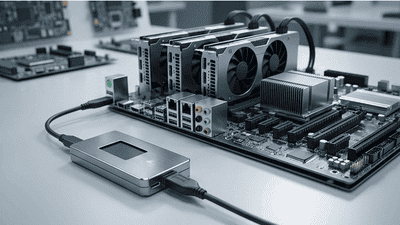
One of the more subtle issues for thematic ETF analysis is that constituent overlap can create hidden concentration. Imagine two indexes with very different names. One focuses on digital assets and crypto infrastructure, while the other targets AI computing and storage. An investor might assume that combining the two produces exposure to two separate technology trends.
But if both indexes allocate meaningful weights to the same semiconductor, server, networking, or infrastructure companies, the actual portfolio may be much more concentrated than the labels imply.
This is particularly relevant for companies with large market capitalizations. Index methodologies often give larger companies greater representation, allowing a small number of dominant technology suppliers to appear across multiple thematic products. As a result, the overlap may not be visible simply by comparing the number of constituents.
A more useful approach is to examine weighted overlap rather than constituent-count overlap. Two indexes could each contain fifty companies, yet only ten companies might account for a substantial portion of their combined exposure. In that situation, the effective thematic overlap could be much larger than the raw constituent overlap suggests.
Crypto Can Add a High-Beta Layer to AI Infrastructure Exposure
From a market-behavior perspective, crypto exposure can introduce an additional source of volatility. Cryptocurrency markets tend to respond rapidly to changes in liquidity, risk appetite, regulatory expectations, and speculative positioning. AI infrastructure companies can also experience substantial valuation changes, but their earnings narratives are more closely connected to semiconductor demand, cloud capital expenditure, product cycles, and corporate technology budgets.
When the same company appears in both thematic ecosystems, its share price can become influenced by multiple narratives at once. Investors may react to AI-related earnings expectations at the same time that broader technology sentiment is being affected by cryptocurrency market conditions.
This does not imply a permanent correlation. The relationship can strengthen during periods when investors favor high-growth technology and weaken when fundamental differentiation becomes more important. The overlap is therefore better understood as a potential transmission mechanism than as a fixed statistical relationship.
Memory Companies Are an Important Bridge

Memory is especially interesting because it sits between the compute layer and the storage layer. HBM has become strategically important for high-performance AI accelerators, while DRAM and NAND remain essential to broader computing and storage architectures.
A memory manufacturer can therefore participate in an AI infrastructure index even when the index is not explicitly focused on memory. The same company may also appear in technology, digital infrastructure, semiconductor, or other thematic indexes that have indirect connections to crypto computing.
For investors studying AI storage ETFs, this means memory exposure should not be evaluated only by looking at the product name. The underlying holdings and their revenue structures matter considerably more. A storage-oriented index may contain companies whose economic sensitivity is actually dominated by AI accelerators, while another product may appear to target AI compute but carry significant exposure to memory manufacturers.
This creates an interesting cross-theme dynamic. If AI demand accelerates, memory pricing and capital expenditure may respond. If cryptocurrency activity simultaneously strengthens, the same technology companies may receive an additional valuation impulse. Conversely, a broad technology selloff can affect both themes even when their operational fundamentals remain different.
Index Methodology Matters More Than the Theme Label
The overlap between crypto and AI storage becomes much easier to understand when index methodology is examined carefully. Some indexes use pure-play revenue criteria, while others include companies based on strategic relevance, market capitalization, technology exposure, or supply-chain participation.
A pure-play methodology can reduce accidental overlap but may also exclude diversified companies that are economically important to the theme. A broad methodology captures more of the infrastructure ecosystem but can create greater cross-theme concentration.
Weighting methods matter as well. Equal-weight indexes can distribute exposure across a larger number of companies, while market-cap-weighted indexes can become dominated by a small group of large technology firms. Revenue-weighted methodologies can produce yet another pattern by emphasizing companies with measurable business exposure to a particular theme.
For index derivatives, these distinctions become even more important. Futures, options, and other derivative instruments inherit the behavior of the underlying index. A derivative referencing an AI infrastructure index may therefore carry substantial sensitivity to semiconductor companies that also appear in crypto-related indexes.
Derivatives Can Amplify the Perception of Correlation
Derivative markets can make constituent overlap more visible because investors often trade expectations rather than long-term ownership. When volatility rises, correlations between high-beta technology themes can increase as investors reduce risk across portfolios simultaneously.
Suppose crypto prices experience a sharp repricing because of a liquidity shock. A crypto infrastructure index may decline rapidly. If that index contains semiconductor or data-center companies, those stocks may also be affected. At the same time, AI storage indexes could decline because investors are reducing exposure to growth-oriented technology broadly, even if AI storage demand has not changed materially.
The resulting price movement can make the two themes appear more economically connected than they actually are. In reality, the common driver may be liquidity or risk positioning rather than semiconductor fundamentals.
This distinction is essential when interpreting correlation. Short-term price correlation does not necessarily mean long-term revenue correlation. Index derivatives can strengthen the former without changing the latter.
Three Layers of Overlap
The relationship between crypto and AI storage can be viewed through three different layers. The first is technological overlap, where the same hardware categories support multiple computing ecosystems. The second is corporate overlap, where the same companies generate revenue from different technology themes. The third is financial overlap, where the same stocks, ETFs, and derivatives are traded by investors responding to broader liquidity and risk conditions.
Technological overlap tends to develop slowly because it follows infrastructure evolution. Corporate overlap can change as companies enter new markets or adjust product strategies. Financial overlap can change much faster because capital can move between themes within hours.
These three layers should not be confused. A high degree of financial correlation does not automatically prove deep technological integration, just as technological similarities do not guarantee similar stock-market behavior.
What Investors Can Learn From the Overlap
For thematic ETF analysis, constituent overlap provides a useful way to understand hidden exposures. Instead of evaluating each product exclusively through its stated theme, investors can examine the underlying companies, sector weights, revenue sources, and sensitivity to semiconductor cycles.
It can also be useful to separate direct and indirect exposure. A company that generates most of its revenue from AI data-center infrastructure represents a different type of exposure from a diversified technology company that only supplies a small portion of its products to that market.
Another useful distinction is between cyclical and structural exposure. AI storage may benefit from long-term growth in data generation and accelerated computing, while crypto-related demand can be more sensitive to market cycles. When both are present in the same index, the structural AI story and cyclical crypto story can influence valuation simultaneously.
From a portfolio-research perspective, this makes constituent analysis more informative than thematic labels alone. It reveals whether two supposedly different ETFs actually provide complementary exposure or simply package similar technology companies under different narratives.
Scenario Analysis for the Dual-Driver Relationship
In an AI-led expansion scenario, demand for accelerators, HBM, enterprise storage, networking, and data-center infrastructure could strengthen the fundamental case for overlapping technology companies. Crypto activity could provide an additional source of demand or investor enthusiasm, but the AI infrastructure cycle would remain the primary operational driver for many semiconductor suppliers.
In a liquidity-driven technology rally, the relationship could look different. Crypto and AI-related equities might rise together because investors are increasing exposure to high-growth technology, even if the underlying revenue outlook for individual companies changes only modestly.
In a macro slowdown, the overlap could become a source of downside concentration. Higher financing costs, weaker capital expenditure plans, lower risk appetite, or tighter liquidity could pressure both thematic indexes simultaneously. Yet individual companies could still perform differently depending on their balance sheets, product cycles, and exposure to structural AI demand.
Looking Beyond the Headline Correlation
The most interesting aspect of the crypto and AI storage relationship is not whether the two themes are correlated at a particular moment. It is why that correlation exists and which companies transmit it.
A useful research process begins with the constituent list and then moves through sector exposure, revenue exposure, semiconductor dependencies, capital expenditure sensitivity, memory exposure, and valuation drivers. After that, investors can examine how the same constituents behave under different liquidity, volatility, and technology-demand environments.
This approach turns index analysis from a simple comparison of performance charts into an examination of economic structure. Two ETFs may move together because they own the same semiconductor companies. They may diverge because one has greater exposure to crypto-sensitive businesses. Or they may temporarily converge because both are responding to the same global liquidity conditions.
Conclusion
The overlap between crypto infrastructure and AI storage is a reminder that modern technology themes rarely exist in isolation. Beneath different narratives lies a connected ecosystem of semiconductors, memory, servers, networking, power, cooling, data centers, and capital-intensive infrastructure.
For AI storage and computing ETFs and index derivatives, constituent overlap can therefore become an important source of both opportunity and concentration. The same company can represent exposure to multiple technological narratives, while the same index can combine structural AI demand with cyclical financial-market forces.
The key is to distinguish technological overlap from corporate overlap and corporate overlap from financial correlation. AI storage and crypto may continue to develop along different fundamental paths, yet their investment vehicles can remain connected through shared companies, shared infrastructure, and shared investor positioning. Understanding those connections provides a more nuanced framework for evaluating thematic indexes and derivatives than relying on the names of the products alone.